 Outfits
Purple for People Who Usually Wear Black
By Toni Mela
A military-inspired jacket can become a costume quickly if every other piece repeats the same idea.
 WORDS BYToni MelaOctober 21, 2026
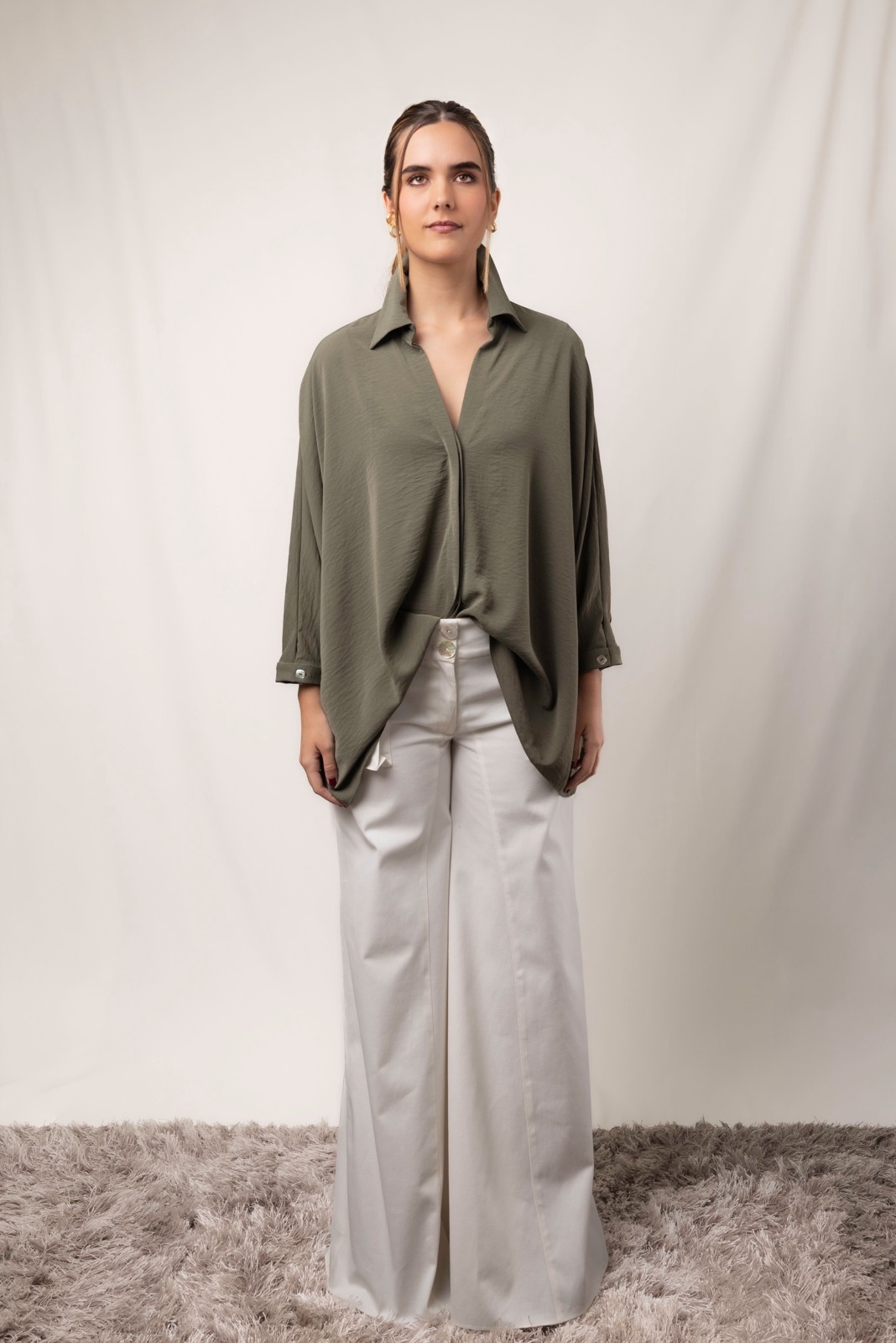
A military-inspired jacket can become a costume quickly if every other piece repeats the same idea. Boots, cargo pockets, a heavy belt and a rigid shirt may all make sense individually, but together they can leave little room for the person wearing them. The easier approach is contrast. Let the jacket bring its structure, pockets or decorative fastening, then give it ordinary neighbours: familiar jeans, a soft knit, a simple skirt or the shoes you would have worn anyway.
Who What Wear has included military jackets in its autumn fashion coverage. The category covers different designs, so there is no single formula that fits every version. An olive field-style jacket asks for different proportions from a shorter, more decorative piece. Start by identifying what your particular jacket contributes, then decide what the rest of the outfit should do around it.
Look at the jacket hanging open and closed. Is the main impression its colour, its pockets, its shoulders or its buttons? If the front is already busy, a simple layer underneath may be enough. If the jacket is relatively plain but has a strong shoulder line, the balance with the trousers or skirt becomes more important. Choosing one dominant feature makes styling feel less like a checklist and more like a conversation between shapes.
Do not assume that the word military means the jacket must be olive. Navy, black and lighter neutral versions can carry similar references through their construction. Nor does the reference require you to adopt a particular attitude. You can wear a structured jacket with relaxed clothes and still have a coherent outfit. The garment's history is not a script you need to perform while buying groceries or travelling to work.
Start with trousers you already trust and a top that does not need adjustment. Put the jacket over them and close it once to check the proportions. If the jacket finishes near the hip, look at how that line meets the trouser shape. A loose leg can work well, but the amount of volume should feel intentional. If everything feels heavy, try a narrower top underneath before changing the trousers.
For footwear, choose according to the route you will walk. A simple trainer can make the jacket feel everyday; a loafer can give it a more considered finish. Neither needs to be presented as an unexpected fashion statement. The contrast works because the shoe belongs to your routine. Add the bag you need, then check whether its strap sits comfortably over the jacket's shoulder details or catches on a button.
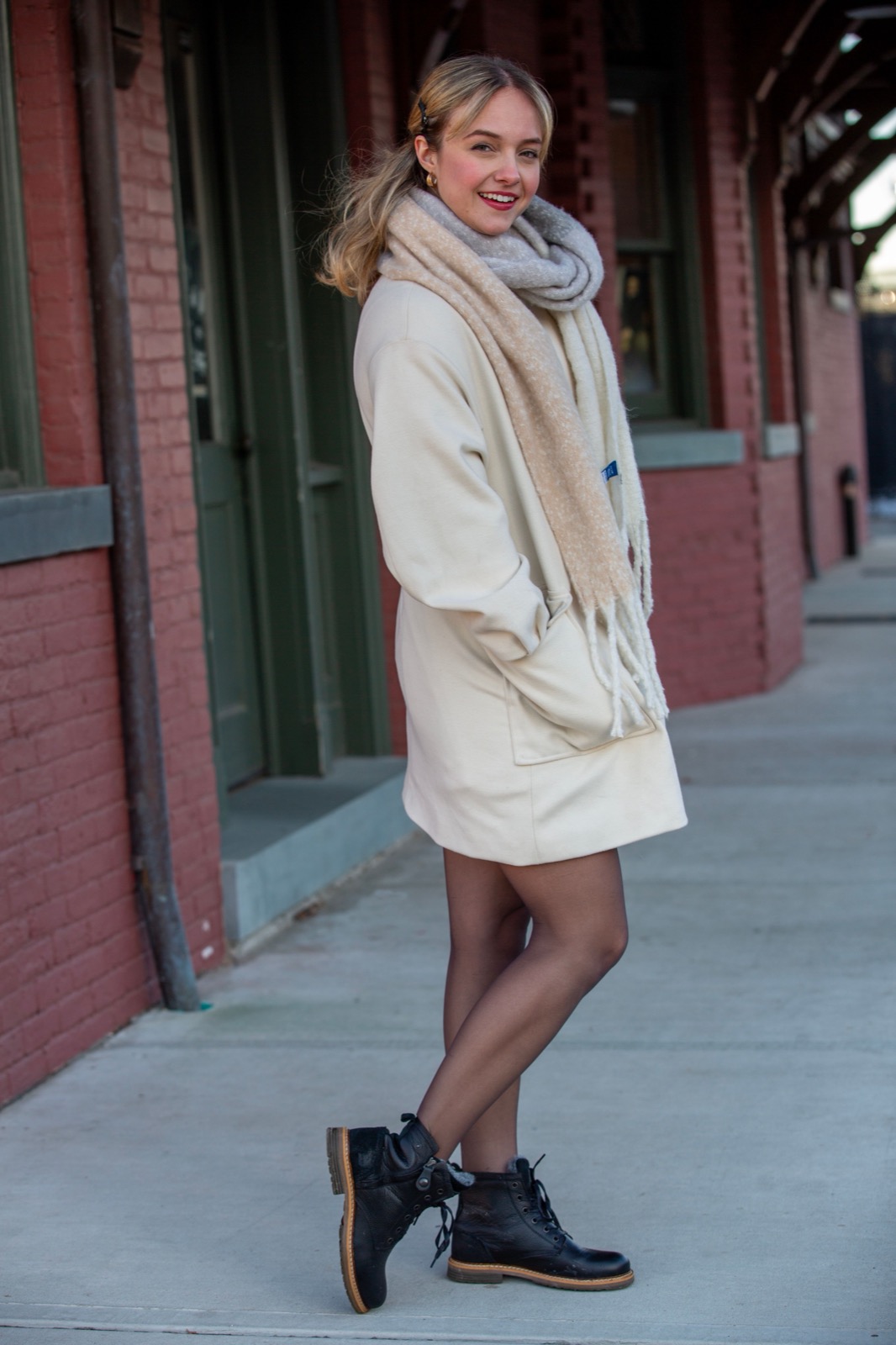
A skirt changes the jacket's context without requiring a dramatic outfit. Try a straight midi with a plain top, leaving the jacket open so that its front becomes a frame. If the skirt is fuller, a shorter jacket may make the waist easier to see. These are starting points, not restrictions. A long jacket and full skirt can be appealing too, particularly when the fabric moves rather than standing stiffly away from the body.
Pay attention to the hem relationship. If the jacket and skirt both finish around the same area, the outfit may lose the distinction you wanted between the two pieces. A different length, an open front or a clearer waist can help. Walk around before deciding. A skirt's movement can make a combination feel lighter than it appears in a still photograph, especially beside a jacket with a more substantial surface.
A fine knit, a fluid shirt or a softly draped scarf can introduce another texture. Choose one soft element first. There is no need to add ruffles, delicate jewellery and a romantic shoe simultaneously to prove that the jacket can be worn differently. Too many contrasting references can become as literal as a fully coordinated military look. The most useful balance is often achieved with fewer decisions.
Consider the neck area. A high collar, prominent buttons and a scarf can compete for the same space. If the jacket already frames the face strongly, leave the layer beneath it simple. If it has a more open shape, a contrasting neckline may be welcome. Try the outfit with your usual hairstyle and glasses too. Those details affect the final impression more than a styling photograph of the jacket alone can show.
Decorative buttons can function like jewellery. If they are the jacket's most noticeable feature, you may prefer a smaller earring or a simpler belt. You do not have to match every metal finish exactly. Instead, notice whether the total amount of shine feels right. A polished buckle and several bright buttons might be plenty; adding more hardware may change the outfit from easy to overly arranged.
Check practical interactions as well. A bag strap can rub against buttons, and a long necklace can catch on a fastening. Pockets may look useful but sit awkwardly when filled. Test what you actually carry before deciding that a jacket is practical because it has many compartments. A pocket that pulls the front out of shape when holding a phone may be better left empty, with the phone carried elsewhere.
You do not need to transform the jacket completely for dinner. Try it over a plain dress or with dark trousers and a softer top. Change the bag if that suits the occasion and choose footwear you can comfortably wear for the journey. The jacket's structure can provide enough contrast on its own. Let the rest of the outfit feel like an extension of your normal wardrobe rather than a separate evening character.
If the jacket feels too casual for the setting, ask whether it is the fabric, fit or detailing that creates that impression. Some versions will move easily between situations; others will remain relaxed. That is fine. A useful garment does not have to perform every possible role. Recognising its limits helps you wear it more confidently in the places where it genuinely belongs.
Before adding a jacket, identify three outfits it would complete using existing pieces. Make them meaningfully different: trousers for work, jeans for a weekend and a skirt or dress for another occasion. If each outfit requires additional shopping, the jacket may be less versatile for you than it first appears. A compelling design can still be a poor fit for the wardrobe waiting at home.
The strongest version of this look is usually the least anxious about its reference. You have a jacket with useful shape and interesting detail. Around it are clothes that fit your body, your preferences and your Tuesday. Wear it open when you want softness, closed when the weather asks for it, and with enough ordinary life around it that the result feels personal rather than rehearsed.
WINTER WARDROBE
Compare these current collections with the shapes and layers you already wear.
For a base layer to wear under shirts or knitwear, start with UNIQLO’s HEATTECH range and compare the neckline and fabric weight with the clothes you already own.
At & Other Stories, compare ankle and knee-high boots around the trousers and skirts you wear most. Check shaft measurements, heel height and outsole details on the individual product page before choosing.
OUR WRITERSToni MelaRead more from Toni Mela on Bloom Club.
All stories by Toni Mela ↗